BLOOMINGTON, Ill. – During May Term, faculty-led travel courses give Illinois Wesleyan University students the opportunity to spend several weeks immersed in a subject. Open to students across majors, the courses combine academic work with cultural experiences and encourage students to consider new perspectives.
For public health major Kaysha Molizone ‘27, a May Term trip to the Dominican Republic changed the way she understands the field she plans to pursue.
Led by Professor of Political Science Greg Shaw, the course brought students to hospitals, clinics, water-treatment facilities and other sites where they could see public health systems in action. Students also participated in community activities and worked on projects designed to address needs.
At one government-funded clinic, Molizone saw how a physician’s relationship with the surrounding community could be just as important as the resources available to the clinic. Walking through a poor barrio with the clinic director, a medical doctor, gave the class a deeper understanding of the residents’ circumstances. It also gave the director an opportunity to check in on the people she served and strengthen her connection with the community.
“That really taught me how spending a lot on health care doesn’t always bring change,” Molizone said. “You can put as much money as you want into healthcare, but if you’re not in the community, changing the social determinants of health — the environment people live in, their education, the way they go about their life — if you don’t address those issues you’re not making a difference.”
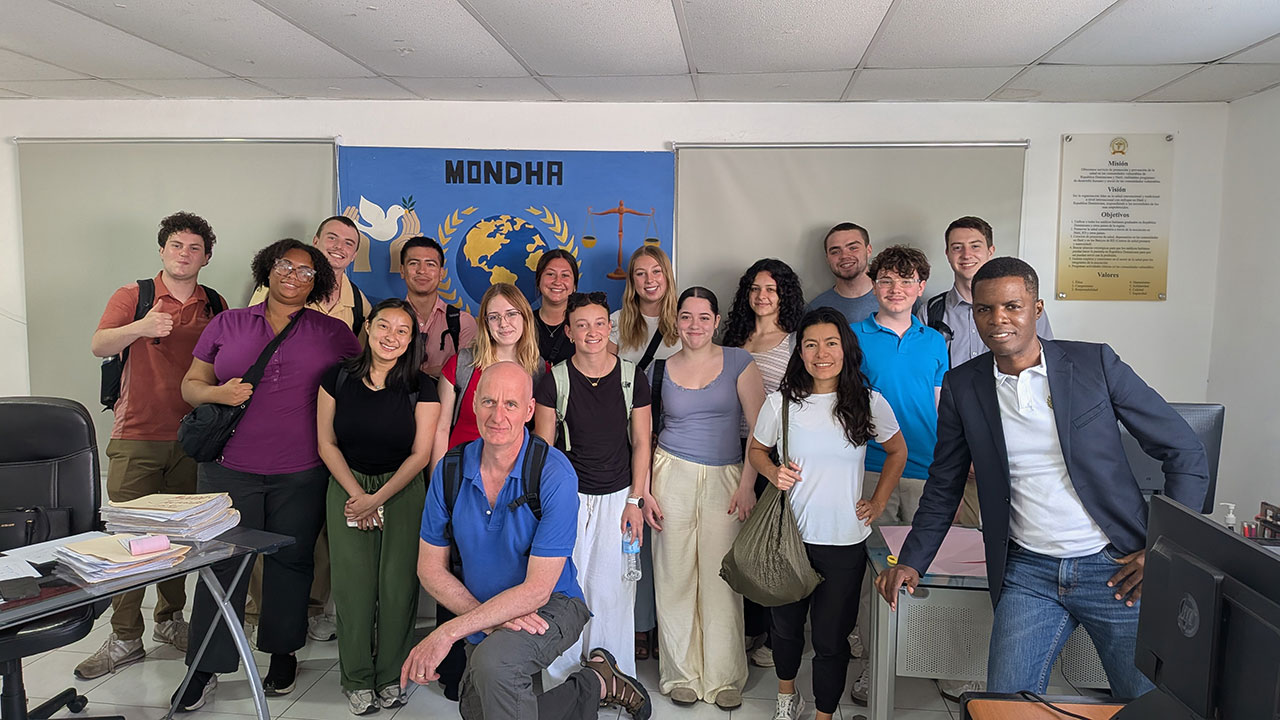
At a health clinic serving migrant communities, students learned to take blood pressure and pulse rates and help direct patients to appropriate services. Other projects addressed accessibility and health communication, including creating visual signs to help patients navigate a clinic.
The experience made Molizone think beyond the health issues she encounters in the United States. Following the trip, she began looking at graduate programs in global health and considering how public health intersects with international diplomacy.
The trip also provided another illustration of how public health is typically addressed outside of hospitals and clinics.
“Everything about our infrastructure is public health,” she said. “When you think about crosswalks, bridges, stop signs, benches at bus stops, shaded areas at bus stops, all of those things are public health issues.”
This trip to a still-developing, middle-income country also provided students with numerous opportunities to begin understanding how lower-income people living in poor neighborhoods cope with, and sometimes thrive, despite what most North Americans would perceive as significant material resource limitations.
***
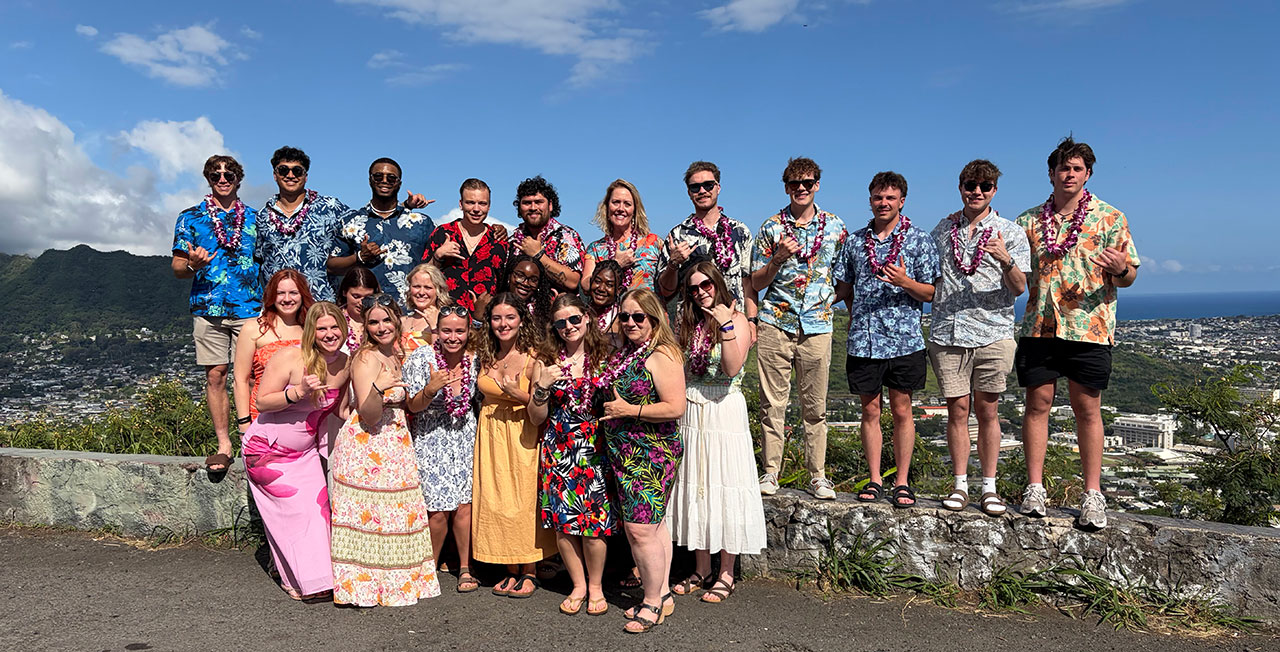
On a May Term course to Hawai’i, students were encouraged to think critically and inclusively about health care as well as how to reflect upon their own impact as visitors to the islands.
Associate Professor of Nursing Amanda Hopkins’ course examined the cultural aspects of health and transcultural health care. Students also explored colonization, historical trauma, homelessness, Native Hawaiian health practices and the environmental and social effects of tourism.
“This trip was intended to springboard student learning regarding how Mālama ʻĀina, an ancient Hawaiian principle which often translates to ‘to care for the land,’ embodies a deep-rooted respect for the environment and a harmonious relationship between humans and nature,” Hopkins said. “That is a foundation of transcultural healthcare in Hawai’i.”
Students participated in outdoor community service projects at Ulu La’au Park–Waimea Nature Park–and Kahaluʻu Kūāhewa, while learning about how to engage in sustainable tourism. Spanning 354-acres, Kahaluʻu Kūāhewa is one of Kona’s largest intact traditional agricultural field systems owned by Bishop Estate-Kamehameha Schools.
Projects included digging up and transplanting traditional healing herbs, weeding, moving fallen lumber and helping create trails.
Kinesiology major and student-athlete Raj Selvaraj ‘27 said the work was more physical than he expected.
“It was gritty and it was fun. We were truly working together as a team,” Selvaraj said.
The course also examined the complicated relationship between Hawai’i and tourism, including the impact of millions of visitors on the islands’ infrastructure and environment.
Hopkins initially questioned whether taking students to Hawai’i could be done ethically. Working with Native communities and redesigning the course around sustainable tourism, however, changed her perspective.
“I went into this thinking I was just going to open the door for students to create change,” Hopkins said. “But I was changed.”
Selvaraj said the experience changed him too. He came away with a greater appreciation for Hawai’ian approaches to health that emphasize connections among the mind, body, spirit and environment.
Since returning to Illinois, he has incorporated some of those ideas into his own life.
“If I’m stressed, I'll go outside,” Selvaraj said. “And just try to find a place where it’s calm so I can relax my mind and body. I have found it to be pretty beneficial just to relax and take time for myself.”
***
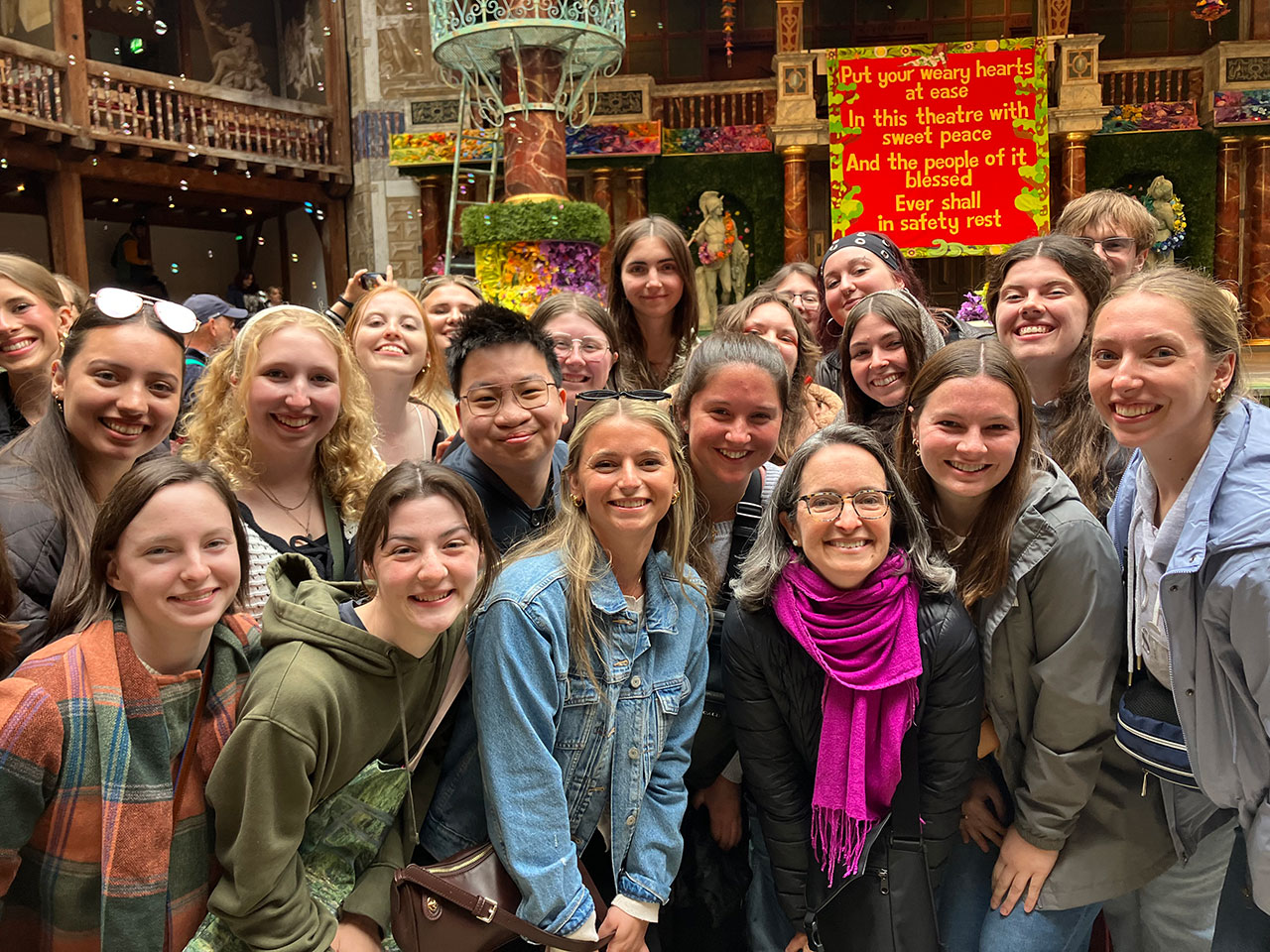
A May Term trip to France and the United Kingdom brought the medieval and Renaissance periods out of the classroom and into historic buildings, libraries and museums for history major Ellie McEnery ‘29.
The course, Maps, Bones, and Windows: London and Paris in the Medieval and Renaissance Periods, taught by Professor of English Joanne Diaz, was structured as a traditional academic course even while students were traveling. Students completed readings, homework, discussions and exams while visiting sites connected to the material they were studying.
Before visiting the British Museum, for example, students read Beowulf because of its connection to the Sutton Hoo burial site, whose treasures are now housed in the museum. Dating to the same general period in which Beowulf takes place, the burial site provides a tangible connection to the world depicted in the epic; quotes from Beowulf even line the glass cases displaying the Sutton Hoo treasures. At the British Library, students participated in a bookbinding workshop, creating their own notebooks, while a stone-cutting workshop taught them techniques used to construct medieval buildings and churches.
“It was a lot easier to understand and visualize what it would have been like in those time periods that we were studying,” McEnery said. “Instead of having it on a slideshow, we were actually there and hearing those stories and doing the work. It was really amazing.”
The trip also required students to navigate unfamiliar cities on their own. While much of the itinerary was planned, students sometimes had to use public transportation and figure out how to reach destinations themselves.
McEnery said that independence was one of the most valuable parts of the experience.
“It was nice to be trusted to do that,” she said. “They trusted us to get where we were supposed to go, even if we thought we had no idea what we were doing.”
Diaz said that balance between academic structure and exploration is central to the travel course experience. Her students were able to study the material in class and then immediately encounter the places, objects and traditions they had discussed.
Travel courses are part of IWU’s broader study-away opportunities, which include faculty-led programs as well as study-abroad programs through outside organizations. Students can participate regardless of their major, giving them the opportunity to delve into their academic interests in communities around the world.
As students consider their course options, May Term travel courses offer another way to engage with their academic interests while learning from communities and cultures outside of campus. Whether studying public health in the Dominican Republic, health and tourism in Hawai’i or medieval humanities in Europe, students returned to IWU with new perspectives, greater independence and experiences that expanded their ways of thinking.