BLOOMINGTON, Ill. – The latest poetry collection by Joanne Diaz has been a long time coming for Illinois Wesleyan's Isaac Funk Professor of English.
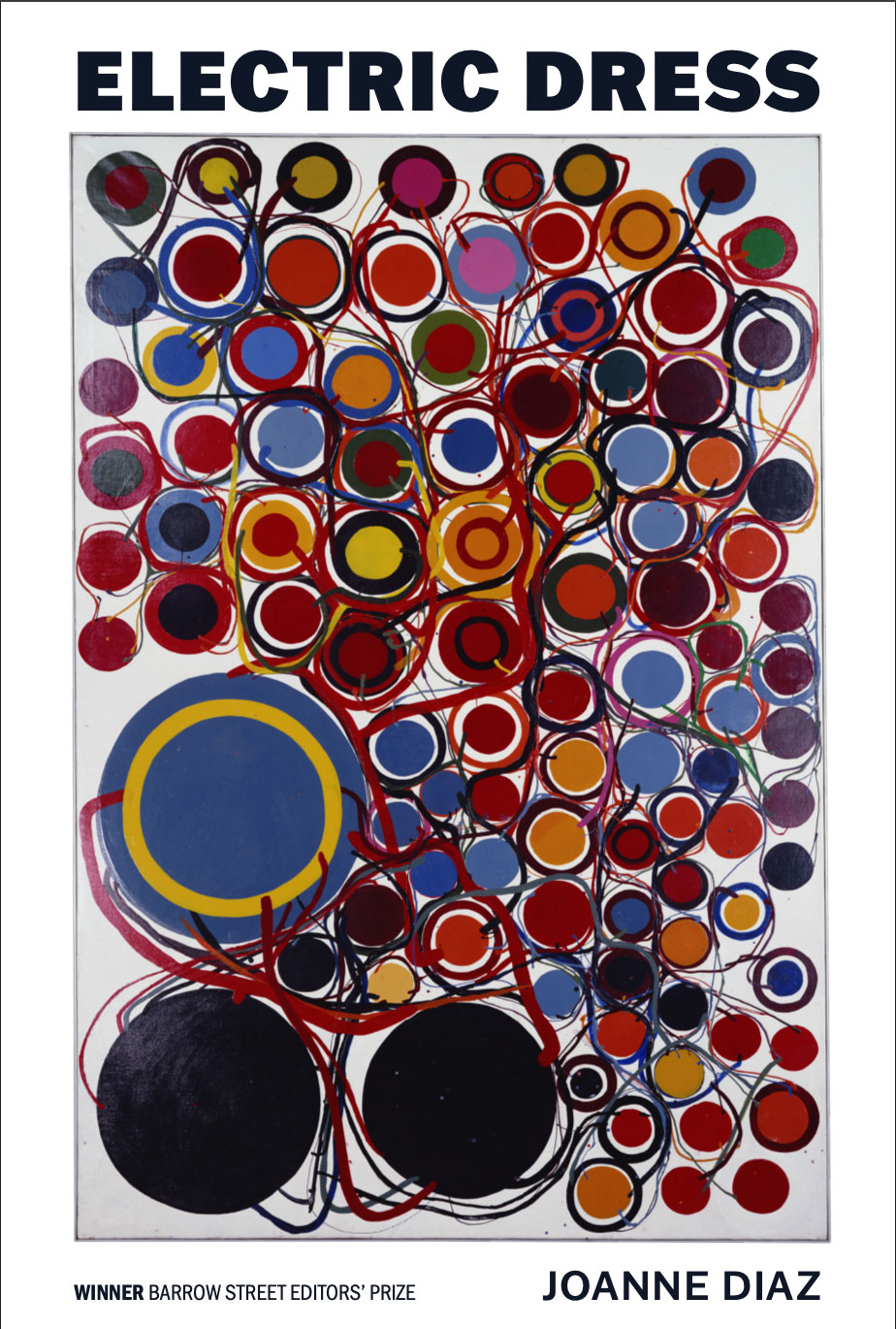
The book titled “Electric Dress” features 27 poems and was released in April of this year, but Diaz said some of the work took her nearly 10 years to write.
“In the world of poetry, people typically write poems one at a time. Over time, you start to see a recurrent pattern, and then you take those clusters and you start to shape them into a book manuscript,” Diaz explained of the writing process.
While a lot of the featured poems have been individually published in literary magazines, Diaz said the book itself went through several rejections and edits before it fully came to fruition and was officially published by Barrow Street Press.
Diaz was recently featured on “The Poetic Turn” podcast hosted by Darren Stephens and Illinois Wesleyan alum Evan Carlson '24, where she read the poem “Shotgun, Rabies.” As she was reading it, she caught herself making edits in real time.
She said one might think, when a book is published, it means it is finished, but the work is never truly done. She knows many poets who edit their work even when they’re reading it aloud to an audience.
“It’s wonderful to have a book in the world and to see it in this stage of completion,” she said. “It feels great, but it’s also very old material that makes me think about different things that have happened in the past 10 to 15 years that led up to the creation of the manuscript.”
“Electric Dress” marks the third book of poetry for Diaz since her first work, “The Lessons,” was released in 2011 and won the Gerald Cable Book Award, and her second book, “My Favorite Tyrants,” was released in 2014 and won the Brittingham Prize. Her latest book was the winner of the Barrow Street Press Editors’ Prize. She is also co-editor, with Ian Morris, of “The Little Magazine in Contemporary America” (University of Chicago Press, 2015) and the editor of three textbooks published by Bedford/St. Martins.
When Diaz isn’t busy teaching students about modern literature and creative writing, she co-hosts the “Poetry for All” podcast with Abram Van Engen. She has also received fellowships from the National Endowment for the Arts and the Illinois Arts Council.
The title “Electric Dress” shares a name with the first poem Diaz wrote for the book, which was inspired by the work of Atsuko Tanaka, an experimental Japanese artist from the mid-20th century, whose most famous piece was a dress she created out of electric tubes.
The 91-page book was originally titled “Septimania”, another poem in the book about contemporary politics in America and how they compare to the Spanish Civil War of the 1930s. Diaz felt the title captured all of the issues that interested her; however, she found that no one really knew what it meant and it didn't work as well with the poem being in the middle of the book. She said as soon as she changed the title, the book was accepted by two publishers.
The artwork for the book’s cover was also created by Atsuko Tanaka. Diaz describes the circular designs as emblems that helped her organize the poems — how they connect, bounce off of each other or push against each other. She said Tanaka’s work often centers on connectivity, kinetic energy, social relationships and engagement with electricity in different forms.
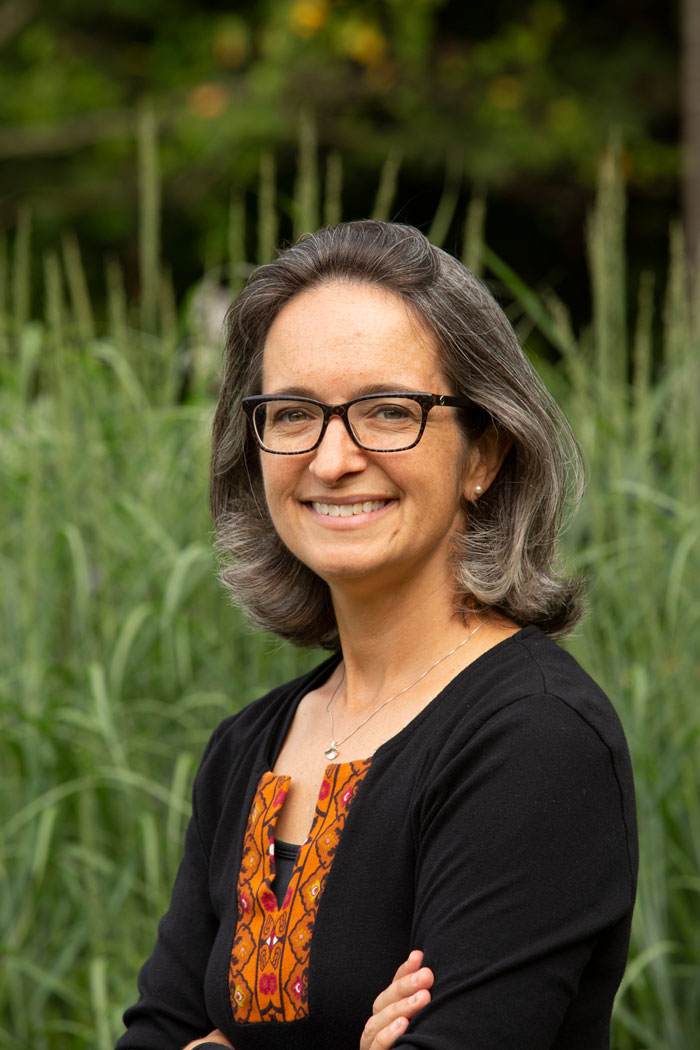
She ultimately describes the book as a series of engagements with place, with history and with visual art as a springboard for inspiration.
Her personal favorite poem from the collection is “Nickerson Beach,” which is a longer poem, broken into six sections, and reads more like an essay. She recalled writing the poem near the end of summer 2021, when people were vaccinated against COVID-19 and able to start seeing their loved ones again.
She explains she was writing it at a time when she was feeling a sense of optimism, but was still thinking about environmental catastrophes and understanding what to do when faced with those issues.
The poem jumps in time to look at work by Henry David Thoreau to Shakespeare’s London in the early 1600s, and it also jumps from Rockaway Beach and Jones Beach in New York to Diaz’s hometown of Billerica, Massachusetts, on the Concord River.
“So, I like how it jumps around across time and place, and that’s something that I really like my poems to do,” she said. “I try to braid things together that might not seem like they have much in common at first, but then by the end of the poem, the hope is that they do.”
Diaz said she often finds writing inspiration through research and archives, but also by walking. She said other poets such as Charles Dickens and William Wordsworth also used walking to write some of their greatest works as well as poet Rebecca Solnit, who wrote an entire book on the history of walking. So, Diaz sees herself in a very similar tradition since she is always looking for connections.
The poets she also often finds herself inspired by are her former teacher Philip Levine as well as Cornelius Eady, Larry Levis, C.K. Williams, Gwendolyn Brooks, Martín Espada and Linda Gregerson.
“I don’t think that poets are any different from anybody else. The only thing that distinguishes them is that they are taking the time to write things down and to notice things, but then also taking the time to give those observations and insights a shape, and the shape they typically choose is poetry,” she said. “Shaping the work and being open to the stimuli of the world: those are things that are important to me.”
Diaz has a poetry reading planned at Brown University on Tuesday, Oct. 29 and will be part of Illinois Wesleyan’s Faculty Colloquium Series on Tuesday, April 6, 2027.
She already has another book completed and is in the process of submitting it to publishers in hopes of it coming out sometime next year. She described it as a word-image project, where she wrote poems in response to photography by her husband, Jason Reblando, who teaches at Illinois State University.
Her work is available for purchase online or “wherever you love to buy books,” but she encourages readers to support local bookstores.
Diaz received her MFA in creative writing from New York University and her Ph.D. in English Literature from Northwestern University.
For more information, visit joanne-diaz.com.