BLOOMINGTON, Ill. – While finals week may be creeping up for students this time of year, the lingering campus ghosts are ready to come out of the woodwork just in time for spooky season.
Illinois Wesleyan University has had a long history of ghosts told to be haunting different buildings over the years since its founding in 1857, and though some of the stories have varied among generations of students, the lore has remained.
For a second year in a row, the Illinois Wesleyan Historia Society and the School of Theatre Arts are partnering to host a campus ghost tour to honor these stories.
“These ghost stories happen on a lot of other college campuses and it just really speaks to our curiosity about what happens after people die,” said Liz Bloodworth, University Archivist and Special Collections Librarian. “I also think about how we can trace these stories, how they change over time, it’s interesting to think about collective memory, oral tradition and how things are passed along.”
Here is a breakdown of the campus ghosts, their stories and the buildings they haunt:
Adams Hall
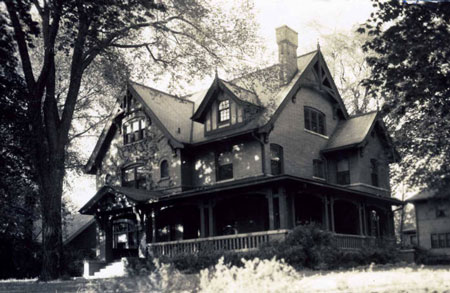
Adams Hall is a co-ed residence hall located at 1401 N. Main St. The first set of ghosts referenced on campus were deemed “The Franceses,” and date back to the 1890s in the building, according to Alyssa Culp, Assistant Professor of History.
The first Frances was allegedly a middle-aged woman who was struck by a carriage outside the house, was dragged inside and ultimately died there. It is said she continues to walk the hallways to protect the house.
The other two Franceses include a young girl and an older woman. It is unclear how the young girl died, but Culp said there are different accounts of some sort of accident with a fire escape. The old woman’s cause of death is also unknown, but she is said to be the protector of the building and she is supposedly the cause of a creaking rocking chair.
Bloodworth said she has tried to dig into school records of the Franceses, but hasn’t been able to find much information.
“I would assume that if a house mother passed away in the house, it would be in a student publication unless it was in the summer, but during the school year, you would think they would put the story in there,” she said. “We only have first names, so that also limits us, so there are a lot of things that make it hard to research these people.”
Ferguson Hall
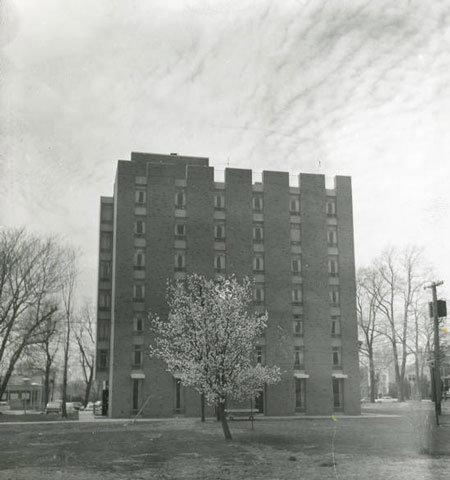
In Ferguson Hall, a residence for first-year students, a ghost named Walter the Toe Tickler became popular in the ‘90s.
Walter was known to be fond of rooms 201 and 208 and enjoyed messing with phone lines, lights, TVs and remotes and other electronics as well as moving around objects like coffee mugs.
Students would say if they noticed their feet being tickled, they knew that Walter was likely the culprit.
“He just kind of vanishes" from the lore, Culp said. "Students don’t really talk about him anymore, so I’m not really sure what happened there, if he was just a millennial ghost or what.”
Gulick Hall
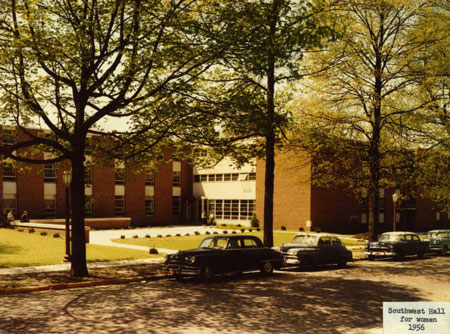
In a 2025 story released by the Argus, students were interviewed about strange things happening in Gulick Hall, the freshmen dorm on campus. Many students mentioned occasions when they were in the bathroom and saw someone walk in and never walk out.
This apparently occurred multiple times. There was another instance where a student came home one night, and when they got back to their room on the second floor, the lights started to turn off and on and they felt a silence come over the room, with a feeling like someone was in the room, but no one was there.
“Those types of things happening in the freshman hall, it may be a ghost or an upperclassman, we don’t know, but that’s kind of the more recent one,” Culp said.
Kemp Hall
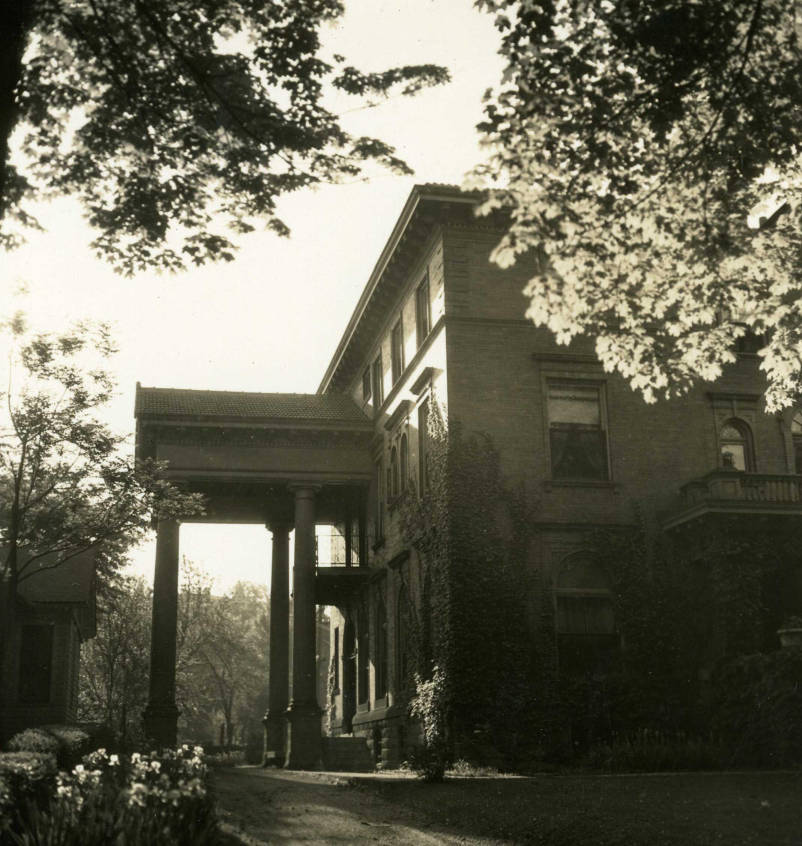
Kemp Hall at 1207 N. Main St. is a first-year residence hall located next to Funsell. Construction of the building began in 1907 after Mary Louise Hodge married Antonie Eduard DeMange and they wanted to build a nice home to live in.
According to records from Evergreen Cemetery in Bloomington, Mary Louise Hodge DeMange died in 1909, so she was only able to live in the house for about a year. Antonie Eduard was devastated by this and no longer wanted to live in the home, so he sold it to Illinois Wesleyan fully furnished.
From what Bloodworth and Culp could find, Mary Louise died of natural causes in her mid-50s. She also had two sons, Ralph and Paul, who fought in France during the Great War, and the whole family is buried in Evergreen Cemetery.
Culp said the house was first used by Illinois Wesleyan as a women’s dorm, and then it became a place for cadets to stay during both World War I and World War II, which is when DeMange’s ghost was deemed the “Lady in Red.” People said they would see a woman dressed in a red ball gown on the old servant’s stairwell, see her reflection in mirrors and the porthole window, or haunt the halls.
Culp said they found accounts of the Lady in Red up until the early 2000s, noting both Kemp and Adams Halls are the most haunted buildings on campus. The Lady in Red is also Bloodworth and Culp’s personal favorite campus ghost because of the historical components.
“There are a couple of instances I find students talking about her in past articles where they insinuate this was a young couple that was newly married and he built the house for her as his new wife, but really it was later in life and they had children,” Bloodworth explained. “It’s interesting to see how stories passed down verbally as part of campus tradition, how they morph over time or deviate from the actual story.”
The story of the “Lady in Red” is also featured on a new WTVP “Haunted Heartland” special, which is now available to stream at wtvp.org, but it will officially air at 8:30 p.m. on Thursday, Oct. 29.
McPherson Theatre
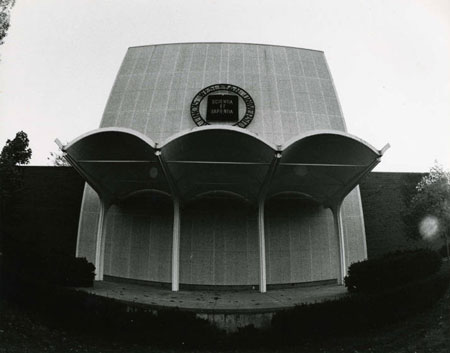
In the late '90s and early 2000s, Culp said there was a sort of revival of ghosts on campus, including a ghost named after past Illinois Wesleyan President Henry McPherson, whose nickname was Harry.
Harry, the ghost, is known as a playful theater ghost who has a favorite chair in the auditorium, and if people sit in it, he tends to make himself known. He is also notorious for causing problems on set, so if anything crazy happened, students would say, “Oh, Harry did it.”
Culp said he is similar to a Phantom of the Opera type of feel, but is not malicious. She said on the ghost tour, he is referred to as the “Casper” of the theater.
“Crazy thing about Harry is some of the students now don’t really refer to him at all or don’t know about him, so I don’t know if he was just an early 2000s thing that grew amongst students and then kind of fell away,” Culp explained.
Phi Mu Alpha
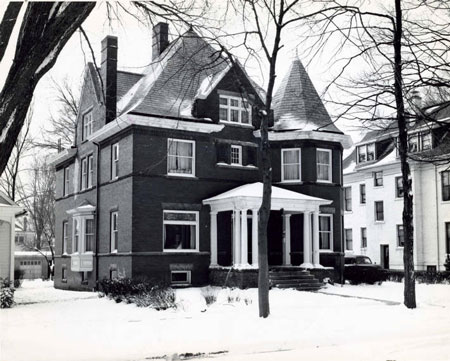
The Phi Mu Alpha house is a men’s music fraternity chapter located at 303 E. Chestnut St. and was built in 1891. The house is said to be the home of the university’s most violent and popular ghost story, which Culp said they have not been able to confirm or deny.
Some records came out a few years ago about a woman named Vera, but she has also been referred to as Ava by students. It is still unknown what exactly happened.
The story goes that Vera’s father was a dentist named Dr. Maymen, who was working on a sailor’s teeth and the sailor ended up having a relationship with Vera and she became pregnant, which was looked down upon at the time. In another version of the story, people say Vera was sexually assaulted, but her father apparently gave Vera an at-home abortion and she died as a result. Her father was devastated and decided to cut up her body, dig a hole and bury her under the house using a dumbwaiter to lower her into the hole.
“You can see why this story has lingered and we actually have photos of students in Phi Mu Alpha peeking down into the hole. The hole is still there from what I’ve heard from students this year,” Culp said.
“Some of the legend with this one, too, even from the stories we’ve seen is that even if the Physical Plant goes and tries to fill the hole, the hole comes back, so it’s kind of like this campus legend at this point,” Bloodworth said. “There’s no factual information that we have that really can verify that Vera died. From what we were able to find, Vera was still alive and lived a full life, so that doesn’t really line up.”
Culp said each generation of students has a different version of the story, where sometimes the father is a dentist or a doctor or sometimes the neighbor is the doctor.
Every year, it is supposed to be the job of the Phi Mu Alpha president to show off the hole, so the story continues on.
Other happenings
Culp said she has not found specific records about other ghost sightings on campus, but there’s a reported ghost that haunts the music building, one in the Ames Library and also a mention of the Theta Chi house.
For Theta Chi, there is a story that said people could hear children’s voices in the middle of the night as if they’re playing on the playground. It was alleged that children were killed on the property during the Civil War and continue to play on the property, but Culp said they have not been able to find any other mentions of the story.
Additionally, there is a ghost named Stella who was said to have haunted the Alpha Omicron Pi or AOII house, which the university no longer owns. The house was said to be the last place the founder visited and then died, so she is believed to haunt the premises.
“Anytime they’d have any sort of gathering, she would be there, or if there were any squabbles in the house, she would make herself known, so for Rush, she was very prominent during that time,” Culp explained. “She was kind of seen as the guardian angel of the sorority, but unfortunately, we don’t hold that property anymore.”
The campus ghost tour will take place at 7 p.m. on Thursday, Oct. 29, starting at State Farm Hall and will feature seven stops, including Kemp and Adams Hall, which are usually the most popular stops of the tour.
There will also be stops at McPherson Theatre, Ferguson Hall and the story of Phi Mu Alpha will be told in front of the Ames Library. Culp said students are still deciding if they will stop at Theta Chi or Gulick Hall.
The event is free and open to the public, and no registration is required.
Culp said the tour is also just something fun for students to look forward to for spooky season and recalled last year about 25 students attended, even some from Illinois State University, and many had no clue about any of the stories and some were even freaked out by them.
“We’re hoping since the ghost tour has only happened once so far that over the next few years it’ll build as a tradition on campus and we can keep those stories alive,” Culp said. “Students love telling these stories to each other. I think it gives them a different perspective, a deep connection to campus and our past, and gives them a shared bond.”