Dr. Martin Luther King Jr. Day Teach-In 2026
Bloomington, Ill. — On Wednesday, January 21st, Wesleyan hosted its annual Martin Luther King Jr. Day Teach-In, an event that honored Dr. King’s legacy through reflection, storytelling, and, this year, most powerfully, music. Sponsored by the Dean of Students Office and the Office of Campus Culture, with support from Student Senate, the Teach-In brought together students, faculty, and community members for a moving program centered on remembrance, resilience, and collective responsibility.
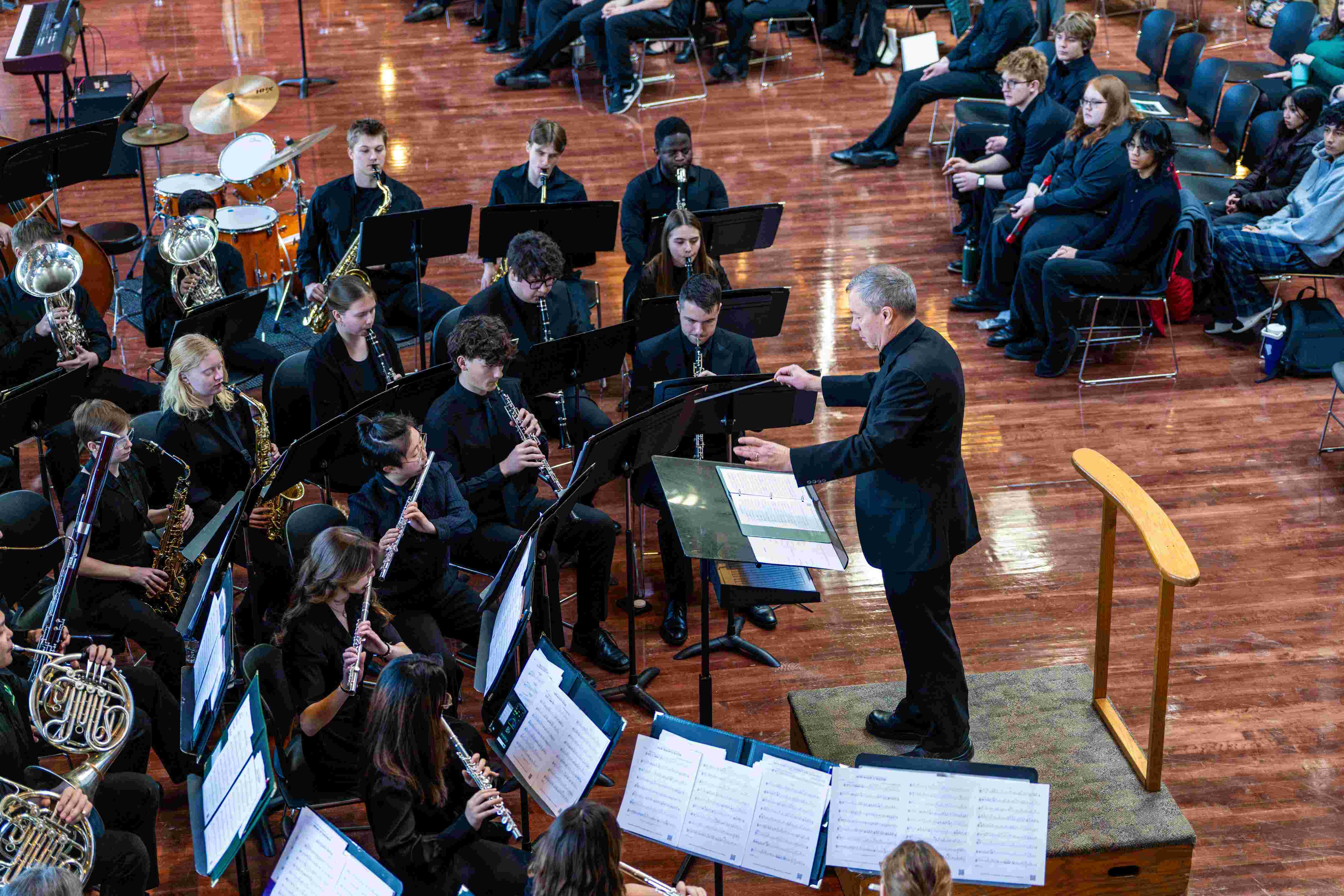
This year’s Teach-In, titled We Shall Overcome: Music of the Civil Rights Era, featured performances from the School of Music ensembles, including the Wind Ensemble, Collegiate Choir, and Jazz Combo. Throughout the program, music served not only as performance, but as narrative, telling the story of racism, oppression, grief, and the enduring spirit of resistance that defined the Civil Rights Movement and continues to shape the present.
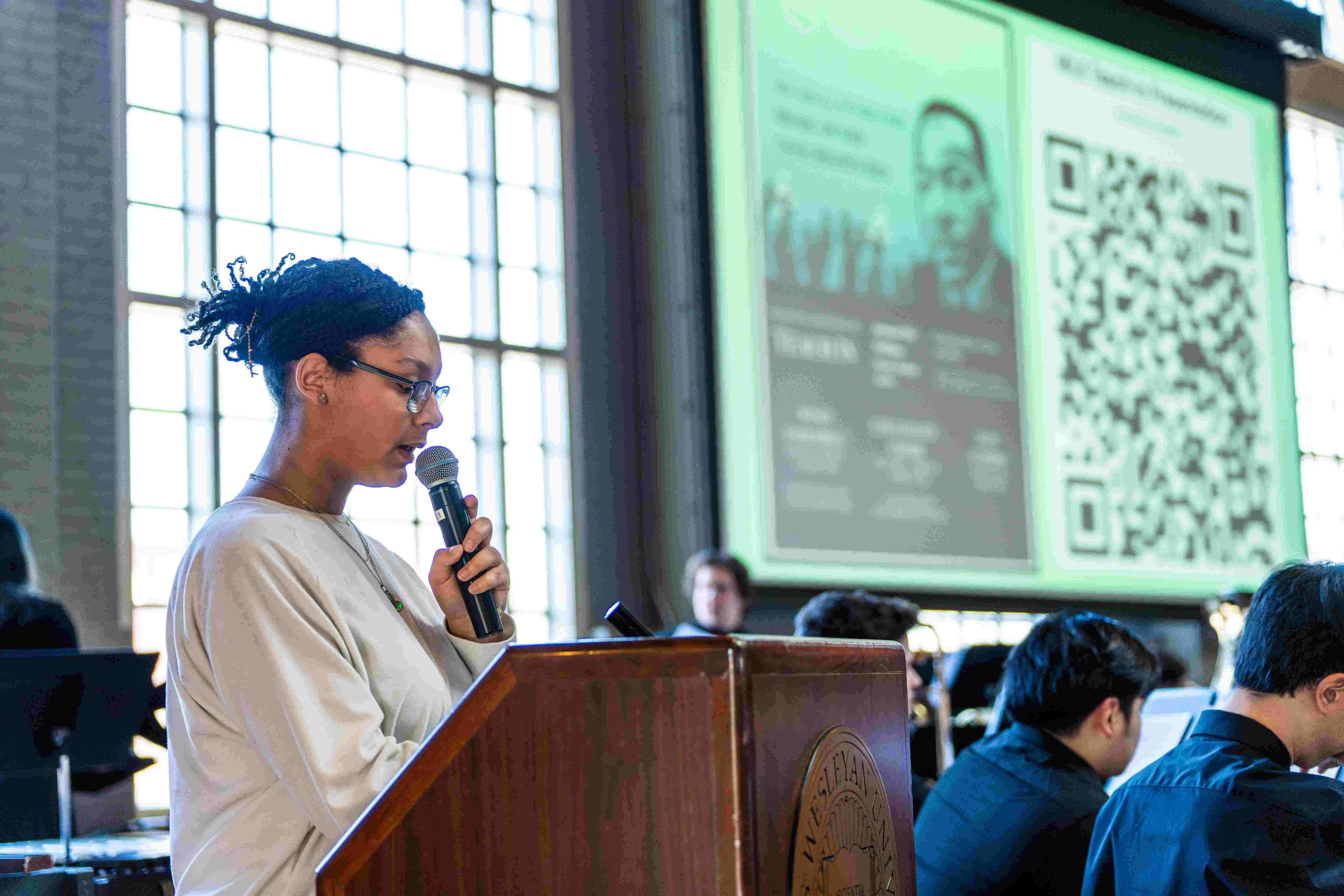
In his opening remarks, President Sheahon Zenger reflected on the history of the MLK Teach-In at Wesleyan, noting that it began in 2004 by the Action Research Center and has grown through collaboration across campus. This year marked a new chapter with the School of Music joining as a full partner in the program, reinforcing Dr. King’s message that progress is built through community and collective effort. Student Senate representatives Neveah Porter and Riya Patel served as narrators, helping guide the audience through the musical and historical journey that followed.
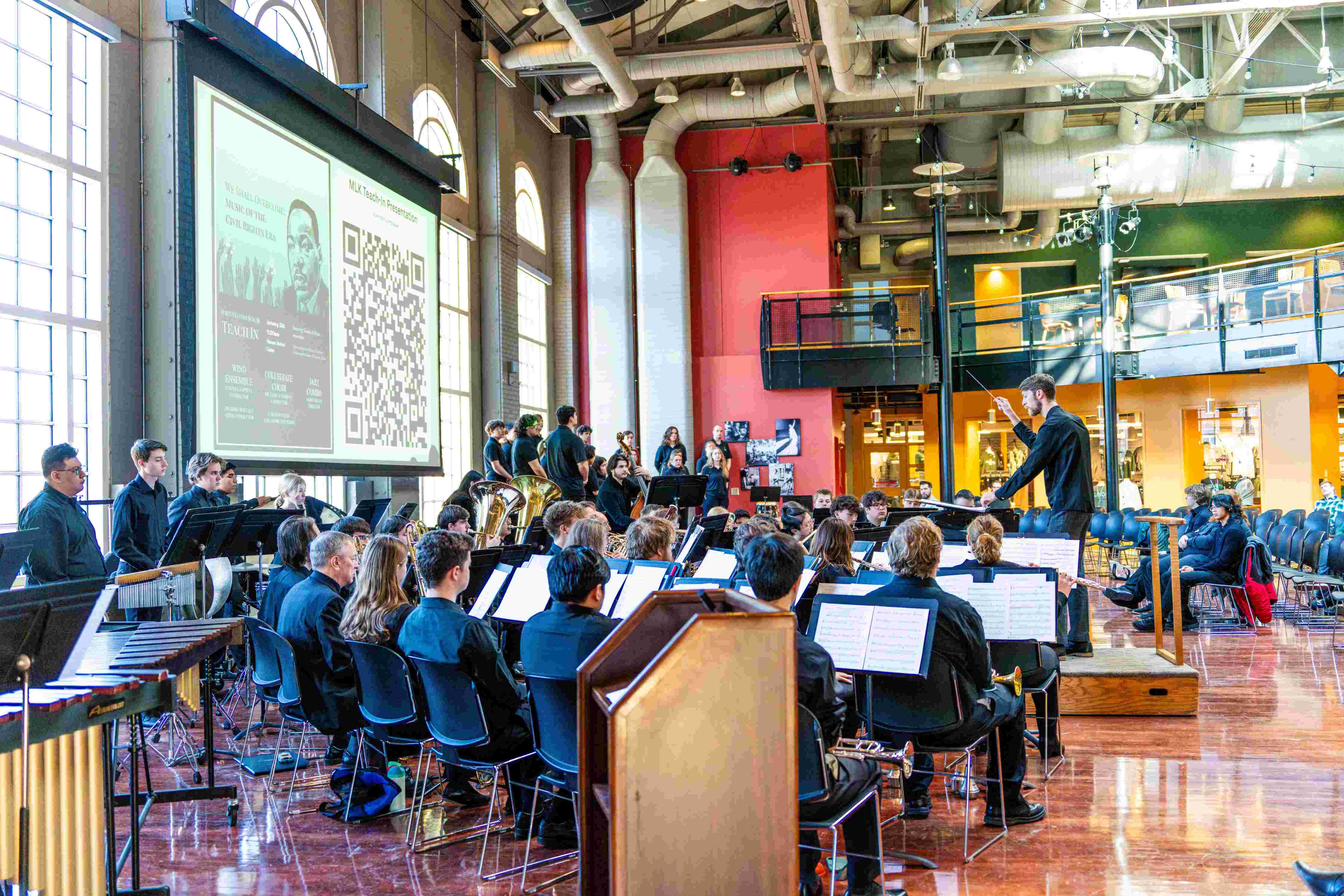
The program opened with History of Tomorrow by Dayla Spencer, performed by the Wind Ensemble. Inspired by the idea that the work of today shapes the history of tomorrow, the piece set the tone for an afternoon rooted in both reflection and forward movement. From there, the Jazz Combo explored some of the most painful chapters of American history through music. Strange Fruit, written in response to the terror of lynching, confronted the audience with the brutal realities of racial violence, while John Coltrane’s Alabama honored the four young Black girls killed in the 1963 bombing of the 16th Street Baptist Church. These pieces demanded attention, not comfort, reminding listeners that reckoning with injustice is never easy, but always necessary.
The Jazz Combo concluded its set with Lift Every Voice and Sing, often referred to as the Black National Anthem, a song that has long served as both a rallying cry and a promise of hope for communities of color. Together, these works illustrated how music has historically been used to mourn, to protest, and to imagine freedom.
The Wind Ensemble returned with New Wade ‘n Water, a modern adaptation of the spiritual that once carried coded messages for enslaved people seeking freedom along the Underground Railroad. Joined by guest musicians from the Bloomington-Normal community, the performance emphasized unity across generations and communities, reinforcing the Teach-In’s broader message that the fight for justice has always been collective.
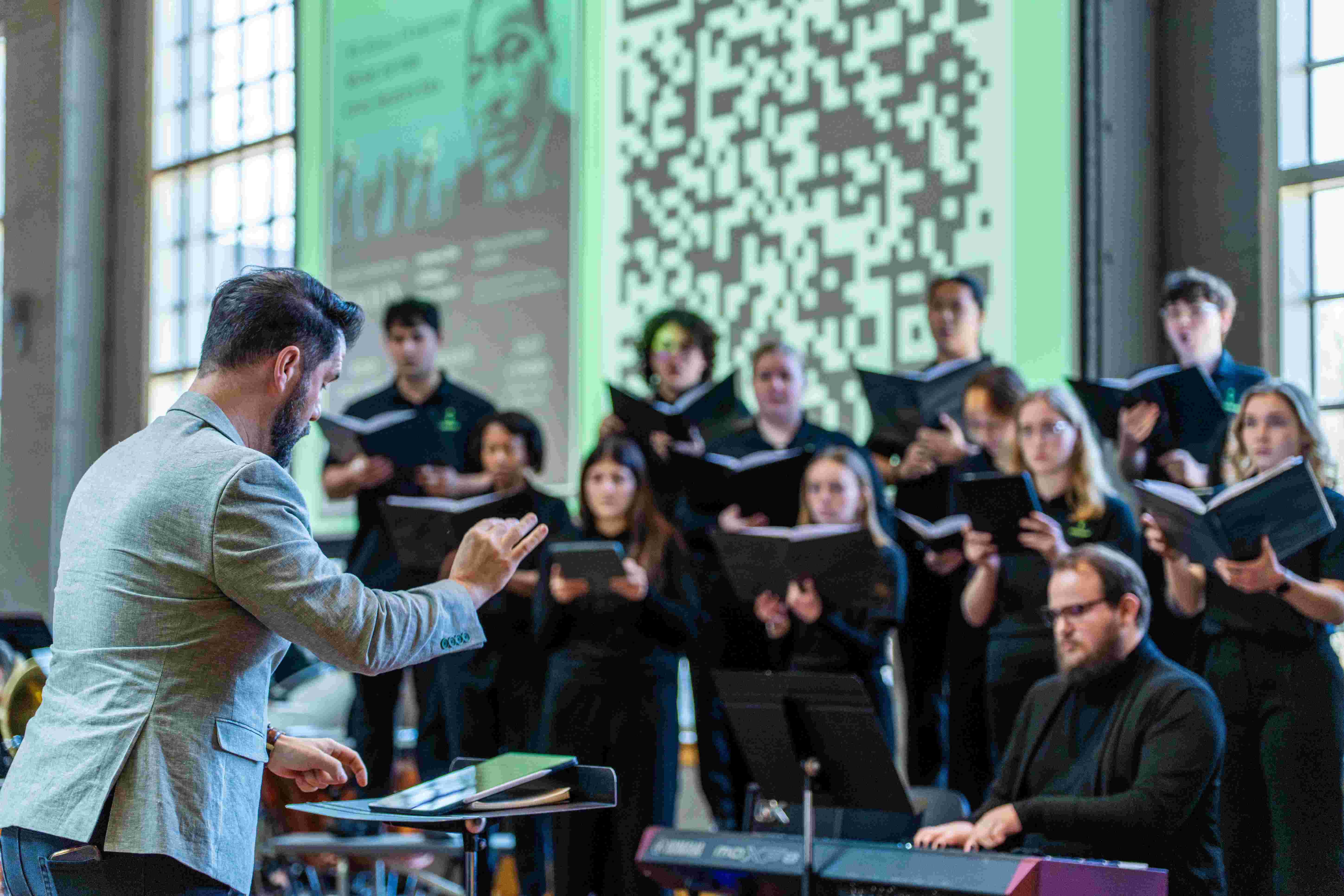
Later performances by the Collegiate Choir continued this theme. When Thunder Comes celebrated Civil Rights heroes and the power of unified voices to “drown out fear,” while Hear My Prayer, arranged by Moses Hogan, offered a quieter moment of reflection, one rooted in vulnerability, faith, and resilience.
 The program concluded with Of Our New Day Begun, a powerful collaboration between the Wind Ensemble and Collegiate Choir. Written
in response to the 2015 shooting at Mother Emanuel AME Church in Charleston, the piece
wove together grief, remembrance, and resolve. Its length and emotional depth allowed
the story of pain and perseverance to fully unfold, and the performance was met with
a standing ovation from the audience. It was a moment that captured the spirit of
the Teach-In itself: acknowledging the weight of history while committing to move
forward together.
The program concluded with Of Our New Day Begun, a powerful collaboration between the Wind Ensemble and Collegiate Choir. Written
in response to the 2015 shooting at Mother Emanuel AME Church in Charleston, the piece
wove together grief, remembrance, and resolve. Its length and emotional depth allowed
the story of pain and perseverance to fully unfold, and the performance was met with
a standing ovation from the audience. It was a moment that captured the spirit of
the Teach-In itself: acknowledging the weight of history while committing to move
forward together.
Following the performance, Director Logan Campbell offered closing remarks, thanking
attendees for their presence and reaffirming his belief in the power of music to educate,
connect, and inspire change. His words echoed the central lesson of the day: that
honoring Dr. King’s legacy requires more than remembrance. It calls for reflection,
imagination, and action.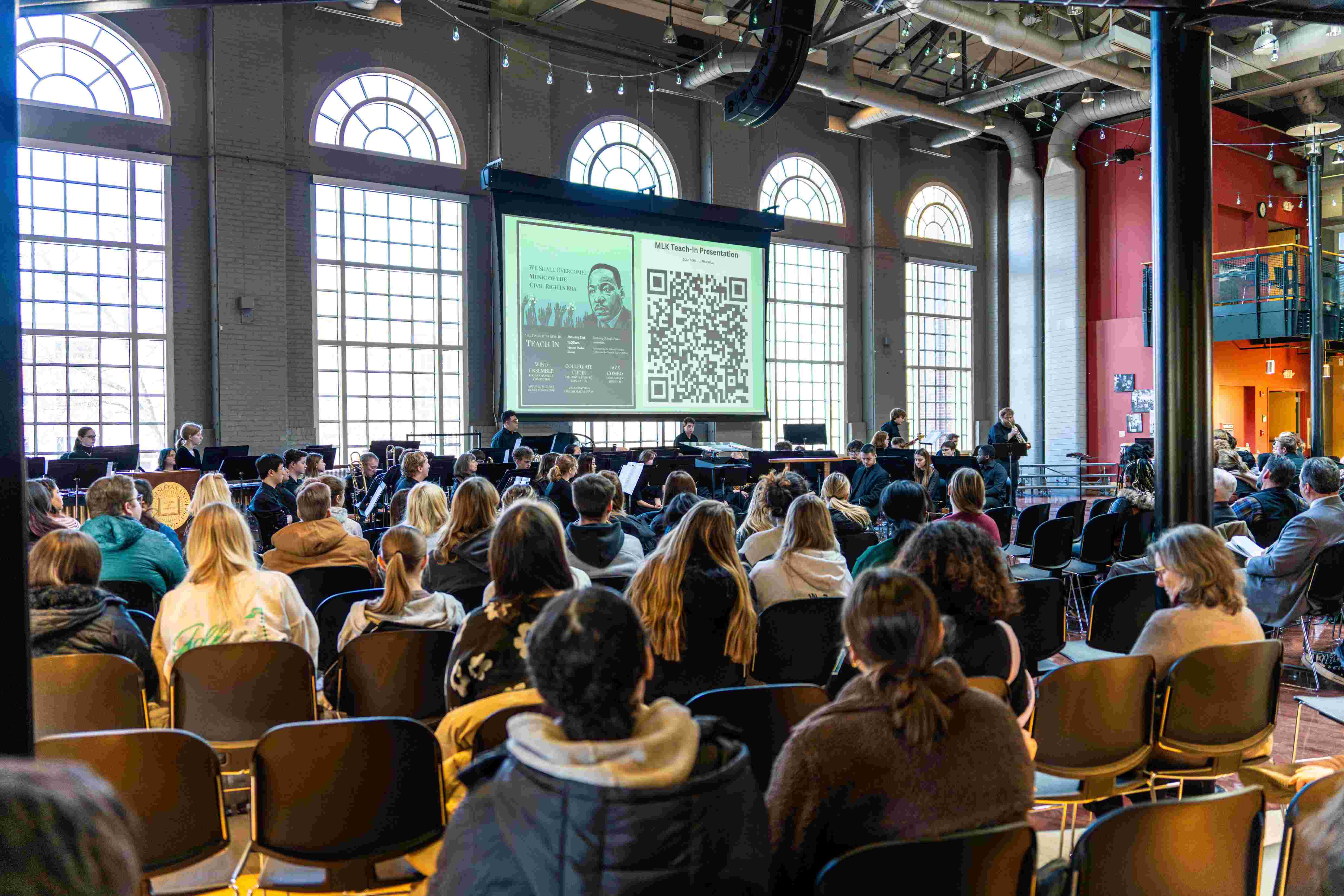
Through music, narration, and community, this year’s MLK Teach-In reminded those in attendance that the struggle for justice is ongoing and that each generation has a role to play in shaping what comes next.
Reflections by Brady Poisal '27