2026 Gebhardt Visitor Series: Amy Tenhouse '97
On February 3, 2026, Illinois Wesleyan University welcomed alumnus Amy Temhouse to the Beckman Auditorium as part of the annual Gebhardt Speaker Series. This year’s program introduced a new format, featuring both a public lecture and a follow-up campus dialogue. Temhouse shared insights from her work in healthcare policy and federal advocacy, offering students a deeper look into the complexities of the American healthcare system and the role policy professionals play in shaping it.
Temhouse currently serves as the Vice President of Federal Affairs at Molina Healthcare,
where she focuses on federal policy and advocacy related to Medicaid. In this role,
she works closely with members of Congress and policymakers, helping advise on legislation
and regulations that affect healthcare access for millions of Americans. She remains
closely connected to Illinois Wesleyan as a member of the University’s Alumni Association
Board of Directors. Earlier in her career, after graduating from IWU, she was selected
as a Dunn Fellow, an experience that helped launch her path into public policy.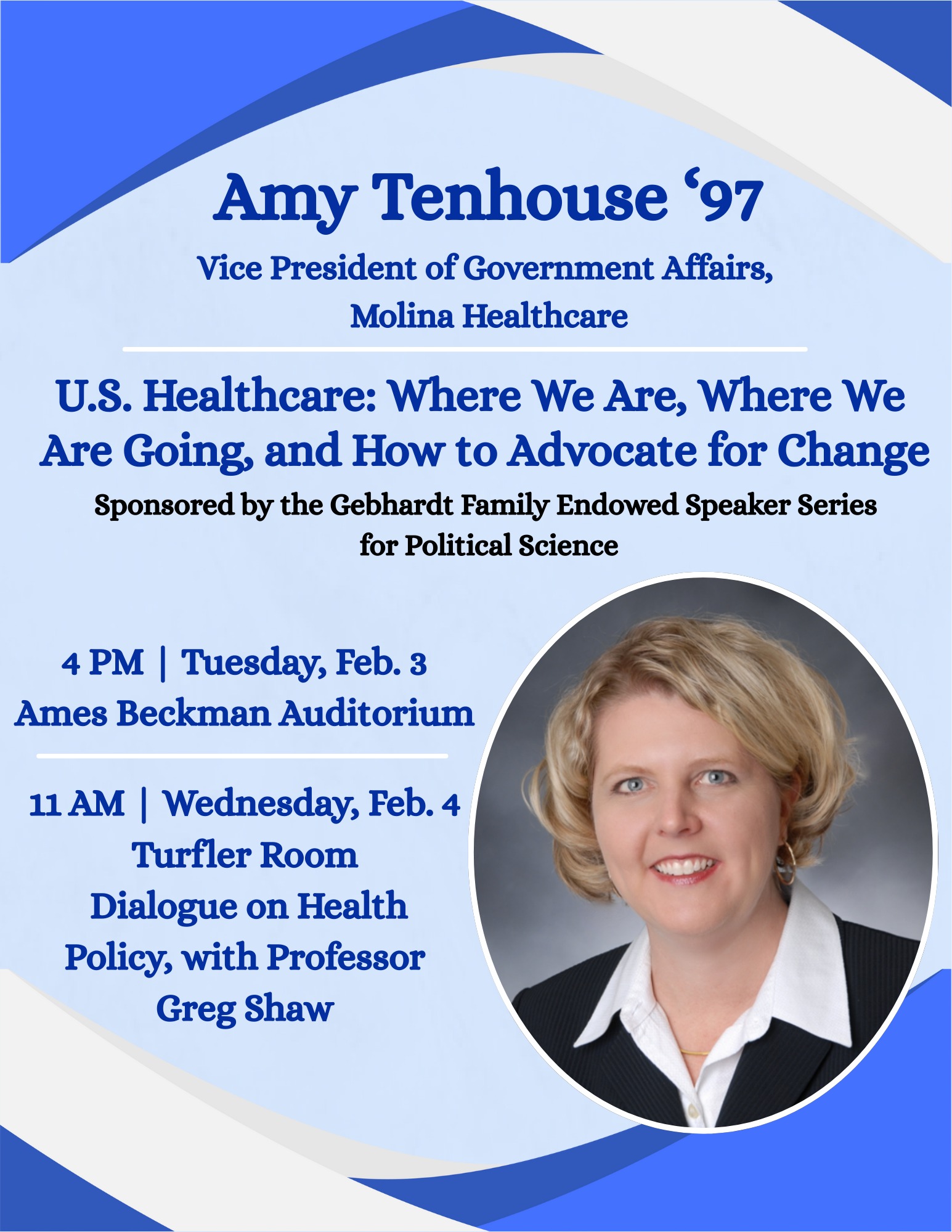
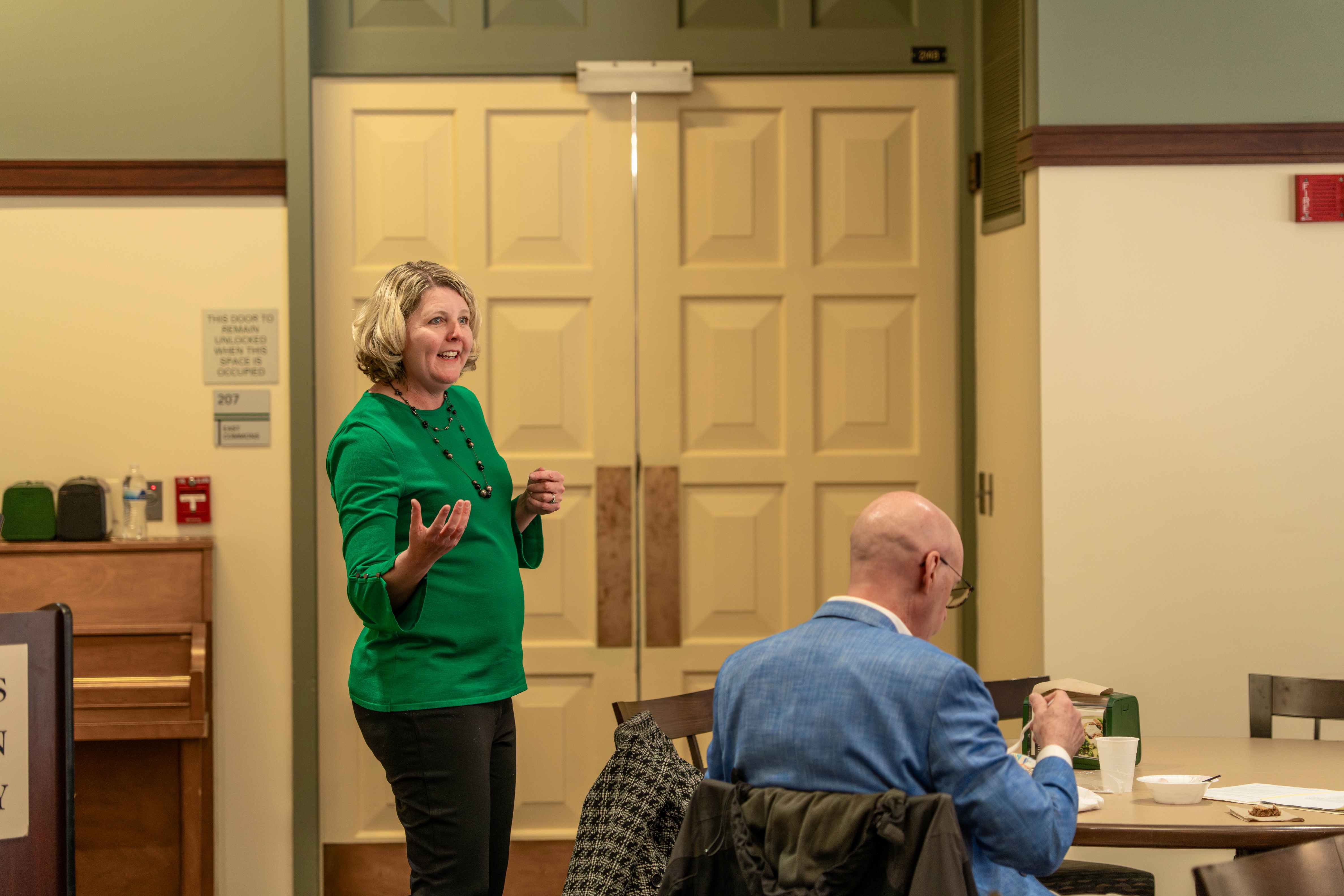
Temhouse began her talk by reflecting on her own unexpected path into healthcare policy. When she first entered the Dunn Fellowship program, she did not anticipate working in health policy at all. However, during her time in the fellowship’s Washington, D.C., office, she began working on healthcare-related issues and quickly realized how central they were to many policy debates. She acknowledged that many people in the policy world try to avoid healthcare policy because of its complexity, but she emphasized that the same complexity also makes it one of the most important and impactful areas of public service.
To provide context for the rest of her talk, Temhouse outlined the structure of the United States healthcare insurance system. Unlike many developed nations that operate under universal healthcare systems, the United States relies on a hybrid model made up of private insurance, public programs, and out-of-pocket spending. Many Americans receive coverage through employer-sponsored insurance plans, while programs such as Medicare, Medicaid, and the Veterans Affairs system provide coverage for specific populations.
Temhouse explained that this hybrid system has both advantages and drawbacks. On one hand, it can foster innovation, encourage technological advancement, and provide patients with a wide range of healthcare options. On the other hand, the system’s complexity often leads to administrative burdens, gaps in coverage, and comparatively high costs. Because of this structure, debates about healthcare reform in the United States often center on whether policy changes should expand public programs or strengthen private market systems.
 Another major theme of Temhouse’s lecture was how healthcare policy tends to evolve
within the American political system. She explained that sweeping reforms are difficult
to achieve because of the country’s fragmented governance structure. Federalism, the
separation of powers, and the large number of stakeholders involved in healthcare
all make major policy changes challenging. As a result, most healthcare policy develops
through incremental changes rather than dramatic overhauls.
Another major theme of Temhouse’s lecture was how healthcare policy tends to evolve
within the American political system. She explained that sweeping reforms are difficult
to achieve because of the country’s fragmented governance structure. Federalism, the
separation of powers, and the large number of stakeholders involved in healthcare
all make major policy changes challenging. As a result, most healthcare policy develops
through incremental changes rather than dramatic overhauls.
Temhouse pointed to the 2017 effort to repeal and replace the Affordable Care Act as an example of how difficult large-scale reform can be. Even with strong political momentum at the time, disagreements between the House and Senate, the complexity of the programs involved, and the large number of stakeholders affected ultimately prevented major changes from being enacted. While Congress can sometimes use reconciliation procedures to pass legislation with a simple majority, those rules apply only to policies that directly affect the federal budget, which limits how broadly they can be used.
She also discussed several healthcare challenges currently facing policymakers. One major concern involves the long-term stability of federal programs such as Medicare. Alongside Social Security, Medicare faces financial pressures that could affect its sustainability in the coming decade. Temhouse also highlighted the growing burden of medical debt and the rising cost of healthcare for American families. Prescription drug prices continue to be a major point of debate in policy discussions involving pharmaceutical companies and federal regulators.
In addition, Temhouse addressed the growing importance of behavioral and mental health services. While social stigma surrounding mental health has decreased in recent years, increased demand for services has created new challenges for healthcare systems attempting to expand access to care. The rise of digital health tools and telehealth services has also introduced both opportunities and regulatory questions as policymakers work to ensure these technologies are used responsibly and effectively.
Another key topic was the transformation of policy advocacy since the passage of the Affordable Care Act. Temhouse explained that healthcare policy is shaped not only through legislation but also through the regulatory process that follows major laws. As federal agencies develop and implement rules, advocacy organizations increasingly engage with regulators on an ongoing basis rather than focusing solely on congressional lobbying. At the same time, healthcare advocacy has expanded at the state level, as states now play a larger role in shaping programs like Medicaid.
Temhouse concluded her lecture by encouraging students to become engaged in policy
conversations, even if they do not initially consider themselves experts. She emphasized
the importance of listening to multiple perspectives and participating in discussions
with people who may hold different views. For those interested in policy or advocacy
work, she highlighted the importance of connecting real human stories with reliable
data when speaking with policymakers. When advocates can clearly demonstrate how policies
affect individuals and communities, those stories can be powerful tools in shaping
legislative decisions.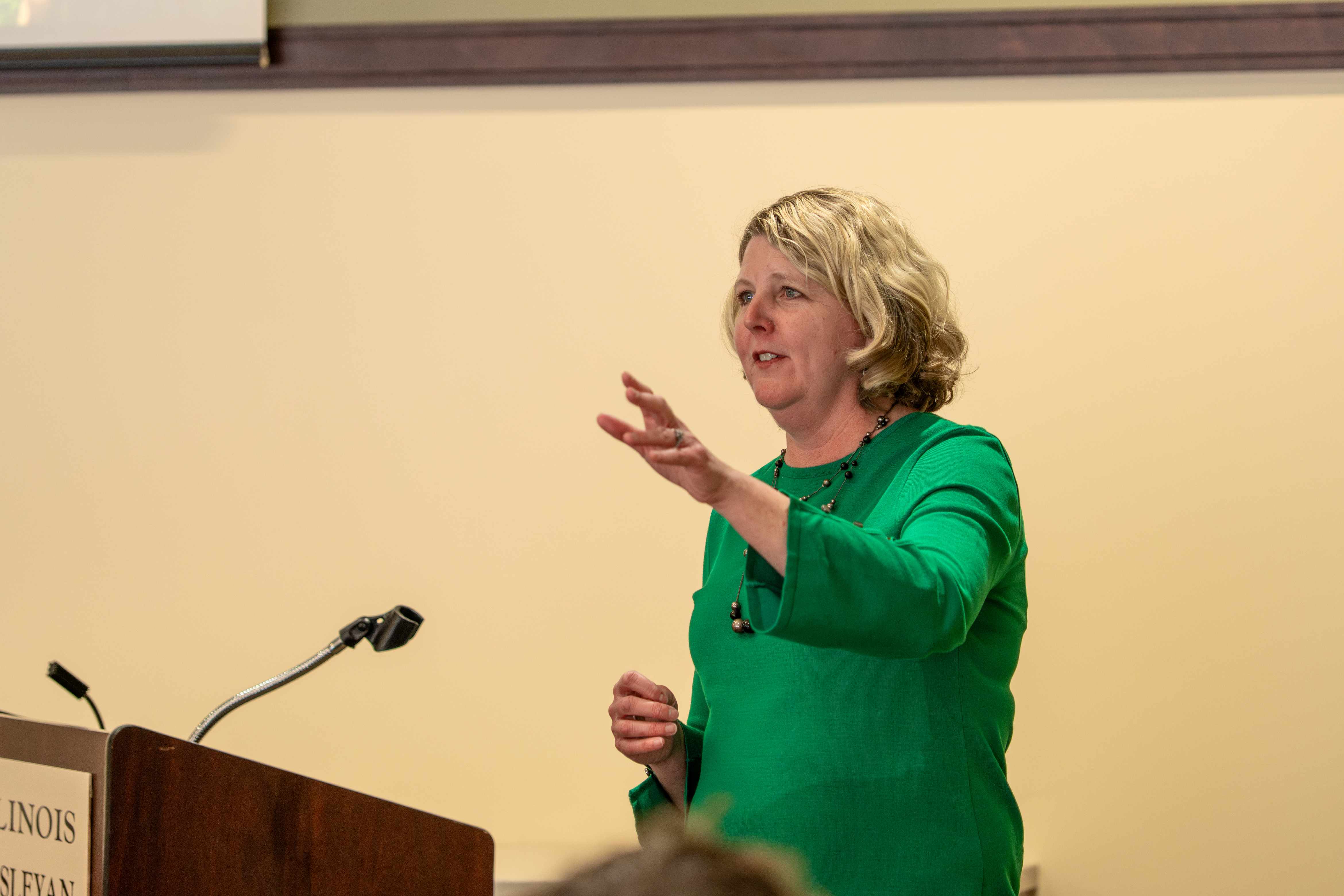
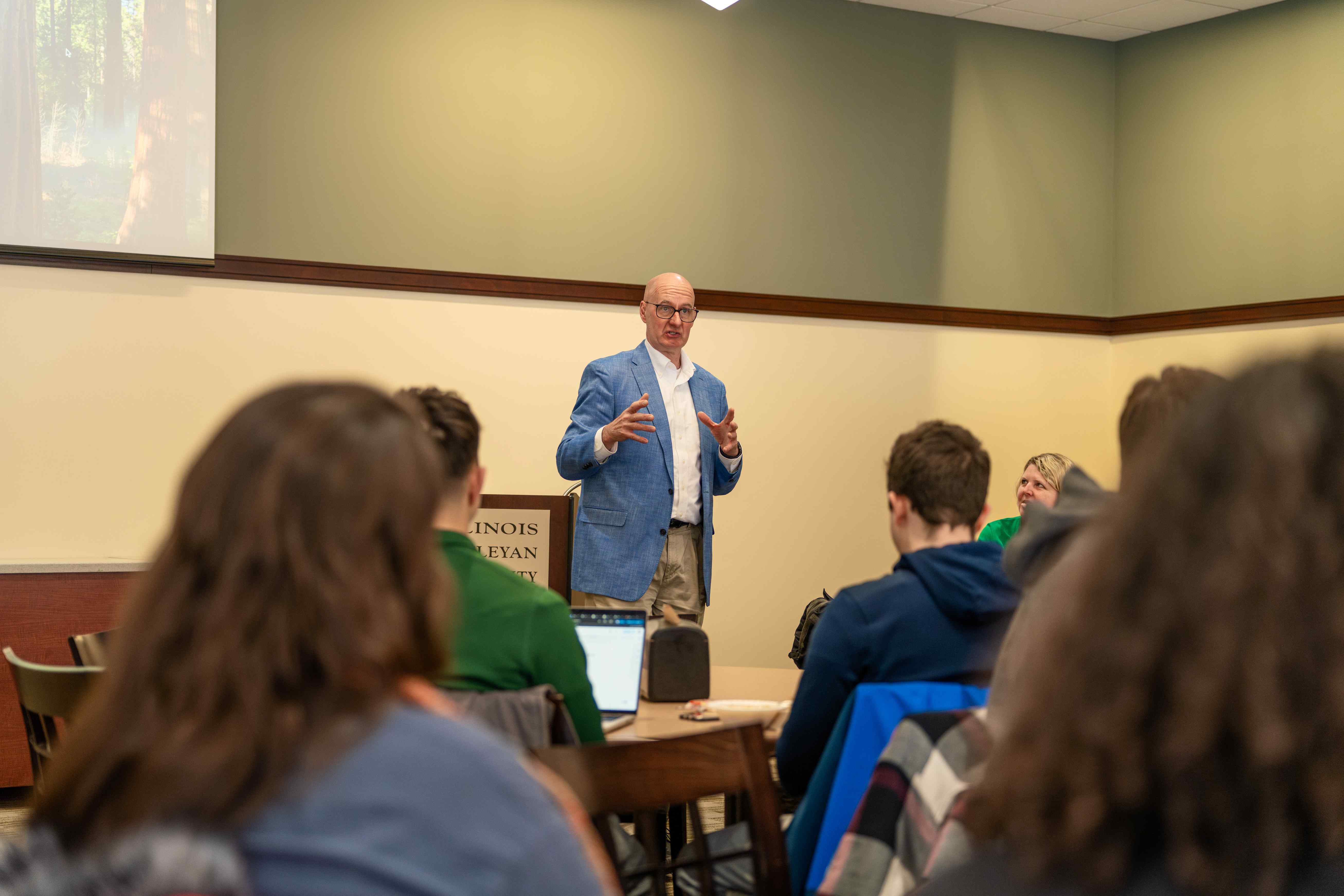
The Gebhardt Speaker Series continued the following day with a campus dialogue between Temhouse and Professor Greg Shaw. The discussion, hosted in the Turfler Room, brought together more than twenty-five students, five faculty members, and Provost John Miles for a wide-ranging conversation over lunch. The event served as a trial run for a new direction in the Gebhardt Series, which aims to feature an annual “Gebhardt Visitor” who can engage the campus community through discussions across multiple disciplines.
Professor Shaw began the conversation by asking Temhouse to describe the lobbying process from behind the scenes. In particular, he asked what skills are most important for policy advocates and how they persuade legislators to move from opposition to support. Temhouse explained that one of the most important skills in advocacy is the ability to present complex information in a clear and relatable way. She noted that effective advocates frame data and policy proposals in ways that demonstrate how an issue affects everyday constituents in a legislator’s district.
Students then asked a range of questions about healthcare policy and implementation. One question focused on the decentralized nature of healthcare in the United States and whether Molina Healthcare works with local health departments. Temhouse explained that Molina partners with local healthcare providers when developing plans for state Medicaid programs and submits those plans through competitive bidding processes.
Another question addressed why some states declined to expand Medicaid even when the federal government offered to cover ninety percent of the costs. Temhouse noted that decisions often reflected a mix of political philosophy and practical concerns. Some states opposed the expansion on ideological grounds, while others worried that even covering the remaining ten percent of the costs could place strain on their budgets, particularly in states with large rural populations.
 The discussion also explored how healthcare organizations attempt to improve access
for underserved communities. Temhouse explained that one approach involves reducing
technological barriers that can prevent patients from accessing care or information.
Another involves helping individuals navigate complex healthcare systems using resources
provided by federal agencies such as the Centers for Medicare and Medicaid Services.
The discussion also explored how healthcare organizations attempt to improve access
for underserved communities. Temhouse explained that one approach involves reducing
technological barriers that can prevent patients from accessing care or information.
Another involves helping individuals navigate complex healthcare systems using resources
provided by federal agencies such as the Centers for Medicare and Medicaid Services.
Technology and innovation were also key topics. When asked whether telehealth and digital medicine could help reduce costs, Temhouse acknowledged their potential benefits but noted that access to these technologies is uneven. Rural hospitals, for example, often lack the infrastructure or workforce capacity needed to fully implement new digital healthcare systems.
Students also raised questions about emerging payment models within the healthcare system. Temhouse explained that many providers are shifting toward what is known as a “value-based care” model. Rather than relying entirely on fee-for-service structures, providers bundle preventative care, wellness programs, and treatment services together in an effort to improve health outcomes while reducing long-term costs.
Throughout the discussion, Temhouse emphasized that healthcare policy often involves balancing efficiency, cost, and equity. While the system faces many challenges, she suggested that continued innovation, expanded coverage, and thoughtful policy reform will be essential to improving access to care.
Temhouse’s visit to Illinois Wesleyan offered students a valuable opportunity to explore healthcare policy from both a practical and ethical perspective. Through her lecture and dialogue with Professor Shaw, she provided insight into the challenges of navigating one of the most complex policy areas in American government while also highlighting the important role that public service and advocacy play in shaping policy outcomes.
By Brady Poisal '27